
Medically reviewed by Dr. Ijeoma Mbionwu, DNP, PMHNP-BC | Review date: October 22, 2026
Anxiety and depression together are more common than most people expect. When both show up, worry and low mood feed each other. Sleep slips. Focus fades. Even a simple day can feel heavy. Here’s the hopeful part: both are treatable, often with the same plan. This guide covers the shared signs, why the two travel as a pair and what helps. You can find care in Orlando or by telehealth anywhere in Florida.
Key Takeaways
- Anxiety and depression often occur together, and having both is common.
- Worry and low mood can feed each other, which makes sleep, focus and daily life harder.
- They share many signs, including poor sleep, trouble focusing, irritability and tiredness.
- Both respond to treatment. Therapy, medication, daily habits or a mix can help.
- Sometimes one medicine helps both conditions, but your provider decides what fits.
- If you have thoughts of harming yourself, call or text 988 or call 911 right away.
Table of Contents
- How Common Is It to Have Both?
- Signs of Anxiety vs Signs of Depression
- What Happens When You Have Anxiety and Depression Together?
- Why Do They Occur Together?
- How Can You Overcome Anxiety and Depression?
- Other Conditions That Can Look Similar
- Getting Help in Orlando or by Telehealth
- Frequently Asked Questions
How Common Is It to Have Both?
Very common. The Anxiety and Depression Association of America reports that close to half of people diagnosed with depression also have an anxiety disorder. Numbers shift from study to study, so treat that as a rough picture rather than an exact count.
Look, that means you’re far from alone. Plenty of people carry both and still hold down jobs, raise kids and show up for friends. They just do it with extra weight on their shoulders.
Signs of Anxiety vs Signs of Depression
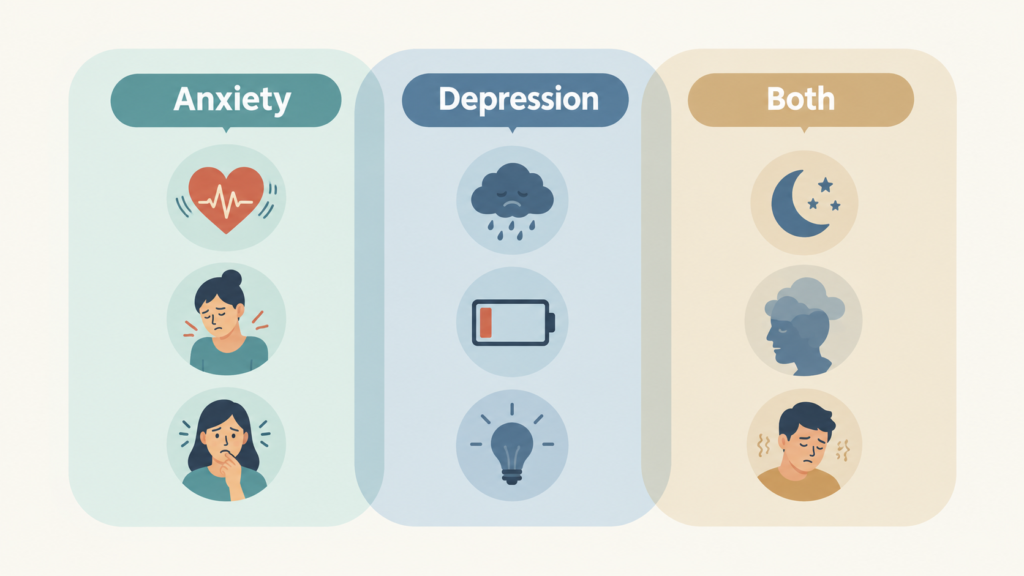
The two conditions feel different at the core. Anxiety pushes you toward fear and tension. Depression pulls you toward heaviness and emptiness. But they overlap in the middle, which is why people often can’t tell which one they’re dealing with.
| Anxiety | Depression | Both can cause |
| Constant worry or fear | Persistent sadness or emptiness | Poor sleep |
| Restlessness, feeling on edge | Loss of interest in things you enjoyed | Trouble focusing |
| Racing heart, tense muscles | Low energy, slowed down | Irritability |
| Avoiding situations | Hopeless or worthless thoughts | Tiredness |
What are 5 symptoms of anxiety? The National Institute of Mental Health lists symptoms like these. Five to watch for:
- Worry that feels hard to control
- Restlessness or a sense of being on edge
- Muscle tension or unexplained aches
- Trouble concentrating
- Trouble sleeping
Anxiety can also lead you to avoid people, places or tasks that set off your worry.
What Happens When You Have Anxiety and Depression Together?
Picture a loop. Worry keeps you awake. Poor sleep leaves you drained. Exhaustion drags your mood down. A low mood tells you nothing will get better, and that thought sparks fresh worry. Round and round it goes.
Here’s what that can look like on an ordinary Tuesday. You lie awake replaying a mistake at work. By morning you’re wiped out. You skip lunch with a friend because you can’t face it. Then you worry about what the friend thinks. The avoiding feels like relief for an hour. It adds fuel by evening.
When both conditions are present, everyday tasks can take more effort. Concentrating gets harder. Decisions feel heavier. Irritability can creep into relationships. None of this means you’re weak. It means two systems are pulling on each other at once.
Why Do They Occur Together?
Researchers don’t point to a single cause. Instead, anxiety and depression share several risk factors:
- Family history. Both tend to run in families.
- Brain chemistry. The brain systems that handle mood and stress overlap.
- Stress and trauma. Long periods of pressure, loss or difficult experiences raise the risk for both.
- Health and life changes. Ongoing health problems, a new baby or a major move can stir up both at once.
One can also lead to the other. Months of constant worry can wear you down until your mood sinks. And depression often brings racing, repetitive thoughts that feel a lot like anxiety.
Think about it: it’s not surprising that a mind under steady strain eventually runs low on both energy and hope.
How Can You Overcome Anxiety and Depression?
Many people feel meaningfully better with treatment. Recovery isn’t a straight line, and you may have off days along the way. But it’s a realistic goal, and you don’t have to figure it out alone.
Treating both conditions is a core part of psychiatric care, and a provider can build one plan that covers them together.
Therapy. Cognitive-behavioral therapy helps untangle the link between thoughts, mood and behavior. It teaches you to catch worry spirals early and to act even when motivation is low. For a deeper look at anxiety specifically, see anxiety treatment Orlando and our guide to the best treatments for anxiety.
Medication. Some medicines help with both conditions, which is one reason a single plan can cover the pair. Your provider chooses based on your symptoms, history and goals. A note on controlled medicines: certain sleep medicines and some short-term anxiety medicines carry extra federal and Florida telehealth rules that change over time, so your provider will explain what applies. Learn more on our depression treatment Orlando page.
Daily habits. Habits won’t replace treatment, but they help it work. Keep a steady sleep schedule. Move your body in ways you can actually stick with. Cut back on alcohol, which can worsen both. Stay in touch with at least one person you trust.
Not sure which condition you’re dealing with? Read how to know if you have anxiety or depression for a simple way to sort it out.
Prefer to stay home? Telehealth lets people anywhere in Florida see a psychiatric provider by video. See treating anxiety and depression online for how it works.
Here is the thing: you don’t have to wait until you feel “bad enough.” Starting earlier often makes the road shorter.
Other Conditions That Can Look Similar
Several other conditions share symptoms with anxiety and depression, which is why a proper evaluation matters:
- PMDD: severe mood changes, irritability and low mood in the days before a period.
- Insomnia: long-term sleep trouble can cause worry and low mood, and it can also be a symptom of both.
- ADHD: restlessness and poor focus can look like anxiety, and ongoing frustration can bring on low mood.
- Medical issues: problems such as a thyroid condition can mimic mood and anxiety symptoms.
A provider can sort out what’s really going on. Treating the wrong thing wastes time, and nobody has time to spare when they’re struggling.
Getting Help in Orlando or by Telehealth
StarMaris offers in-person psychiatric care at 5000 W Colonial Dr, Orlando, and telehealth for people anywhere in Florida. A first visit starts with a conversation about what you’re feeling, how long it has lasted and how it affects your days. From there, you and your provider build a plan together.
If you’re in crisis or have thoughts of harming yourself, don’t wait for an appointment. Call or text 988 or call 911.
Frequently Asked Questions
What happens when you have both anxiety and depression?
Worry and low mood tend to feed each other. Anxiety can disrupt sleep and drain energy, which worsens mood, and depression can bring hopeless, repetitive thoughts that fuel anxiety. Focus, motivation and relationships may suffer. Both conditions are treatable, often with the same plan.
How can I overcome anxiety and depression?
Most people improve with a mix of approaches. Therapy such as CBT builds skills for handling worry and low mood. Medication can help when symptoms are stronger. Steady sleep, movement, less alcohol and social support help too. A psychiatric provider can build a plan that fits you.
What are 5 symptoms of anxiety?
Five common symptoms are worry that feels hard to control, restlessness or feeling on edge, muscle tension or aches, trouble concentrating and trouble sleeping. Some people also avoid situations that trigger worry. If these last for weeks or disrupt daily life, consider talking with a provider.
Can one medicine treat both anxiety and depression?
Sometimes. Certain medicines are used for both conditions, so one prescription may cover both. Whether it’s right for you depends on your symptoms, health history and other medicines. Only a provider who has evaluated you can make that call.
This article is for education and doesn’t replace advice from a medical provider. Statistics mentioned here are typical figures and vary by study.
If you’d like support, you can schedule an appointment in Orlando or by telehealth across Florida.
Get help for anxiety and depression in Orlando or by telehealth across Florida